


BEIJING--(BUSINESS WIRE)--The 2026 ASC Student Supercomputer Challenge (ASC26) Finals recently concluded in Wuxi, China, after five days of exciting, high-intensity competition. Demonstrating exceptional performance, teamwork, and innovation, the teams from Peking University and Tsinghua University stood out among the finalists, proudly earning the championship and runner-up titles, respectively.
ASC26 drew participation from more than three hundred university teams worldwide. After a rigorous preliminary round, twenty-five outstanding teams advanced to the Finals, gathering at Wuxi University for the ultimate stage of competition. During the Finals, each team was challenged to design, build, and deploy a mini supercomputing cluster under a strict 5,000-watt power limit. The competition featured a demanding set of workloads, including the internationally recognized HPL and HPCG benchmarks, the UnifoLM-WMA-0 world model, AMSS-NCKU gravitational wave numerical simulation, QiboTN quantum circuit simulation, and the LeWorldModel world model. In addition, participants took part in poster presentations and defense sessions. The twenty-five finalist teams were also divided by draw into five groups for the Group Competition, where they collaborated across universities to optimize ICON, the Gordon Bell Prize-winning model, and jointly recreate the “Blue Marble” digital twin Earth.
The Finals featured exceptionally intense competition, with twenty-five finalist teams going head-to-head in system design, power optimization, application tuning, and presentation defense. Throughout the event, teams continuously pushed the boundaries of performance, delivering one technical highlight after another.
The Peking University team demonstrated outstanding all-around strength, achieving excellent results across multiple challenges, including world models, gravitational wave numerical simulation, and quantum circuit simulation. Their performance highlighted the next generation of technology talent’s deep understanding of artificial intelligence, supercomputing systems, and interdisciplinary applications, as well as their exceptional optimization capabilities, earning them the ASC26 championship title.
The Tsinghua University team also delivered an impressive performance across multiple challenges, including the LeWorldModel world model, the ICON global climate simulation, and gravitational wave numerical simulation, ultimately securing the runner-up title.
In the e-Prize Challenge, focused on inference optimization for the embodied intelligence world model UnifoLM-WMA-0, the Peking University team conducted extensive low-level code restructuring to build an exceptionally compact, purely functional inference stack. The team deeply customized the underlying graph compilation framework to fully unlock GPU performance, while innovatively separating the sampling processes for action and video generation. Combined with a novel caching strategy, this approach successfully balanced inference speed and output quality, earning the team the e-Prize.
A joint team composed of students from Qinghai University, Shanghai Jiao Tong University, EAFIT University, Beijing Normal University, and other universities demonstrated strong coordination and highly effective cross-university collaboration. The group achieved the highest score in the ICON global climate simulation challenge, jointly winning the Group Competition.
Three teams, including those from Zhejiang University and Fudan University, received the Application Innovation Award in recognition of their outstanding performance in individual competition challenges.
The Shanghai Jiao Tong University team received the Best Presentation Award for its clear logic, professional delivery, and highly engaging team presentation.
Zhang Yonghong, Secretary of the Party Committee, Wuxi University stated: “Hosting the ASC26 Finals represents an important opportunity for the development of Wuxi University. In recent years, the university has focused on modern industrial clusters, supercomputing, artificial intelligence, and other frontier fields, while building an integrated talent development system that combines industry, education, and regional collaboration. The successful hosting of the competition has not only enabled us to gain valuable experience in organizing a world-class technology event, but also allowed the university to engage directly with the latest global developments in supercomputing, providing important guidance for advancing related disciplines and improving talent cultivation.”
Jack Dongarra, Chair of the ASC Advisory Committee, Turing Award laureate, and Emeritus Professor at the University of Tennessee, said: “High-performance computing and artificial intelligence are rapidly converging. Future breakthroughs will depend on people who understand both HPC and AI. ASC provides an exceptional platform for that kind of growth. It not only teaches students how to solve problems through teamwork, but also challenges them to achieve performance breakthroughs under constraints and turn ideas into results. The technical strength, imagination, teamwork, and global perspective demonstrated by these young participants give me great confidence in the future of computational science.”
About ASC:
The ASC Student Supercomputer Challenge serves as an international platform for technical exchange and the development of the next generation of supercomputing talent with broad support from leading experts and institutions across Asia, Europe, and the United States. Through a rigorous, hands-on competitive format, ASC aims to advance academic excellence and practical skills in supercomputing application development and research, positioning high-performance computing as a catalyst for scientific discovery, technological progress, and industrial innovation. Now in its 13th edition, the ASC Student Supercomputer Challenge has engaged tens of thousands of university students from six continents, establishing itself as the world’s largest student supercomputing competition. Learn more about this exciting competition on the official website: http://www.asc-events.net/StudentChallenge/index.html
Contacts
Media contact: media@asc-events.org
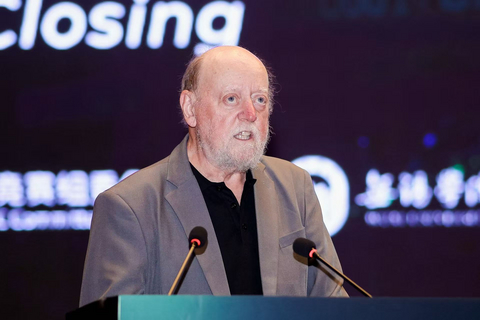
Jack Dongarra's Closing Remarks at ASC26